Skip to content

Log Cabin Somewhere

Collect dead Wood Logs

Collecting Dead - Wood Logs

My original plan was to build a cabin from 2- or 3-inch boards and a lightweight 2x6 frame. Then luck found me, just a short walk from the site, I discovered a ready supply of dead-wood logs.

A rough calculation of how many logs the first section of the cabin would need showed that a traditional log-cabin could be built entirely from the fallen timber that lay nearby.
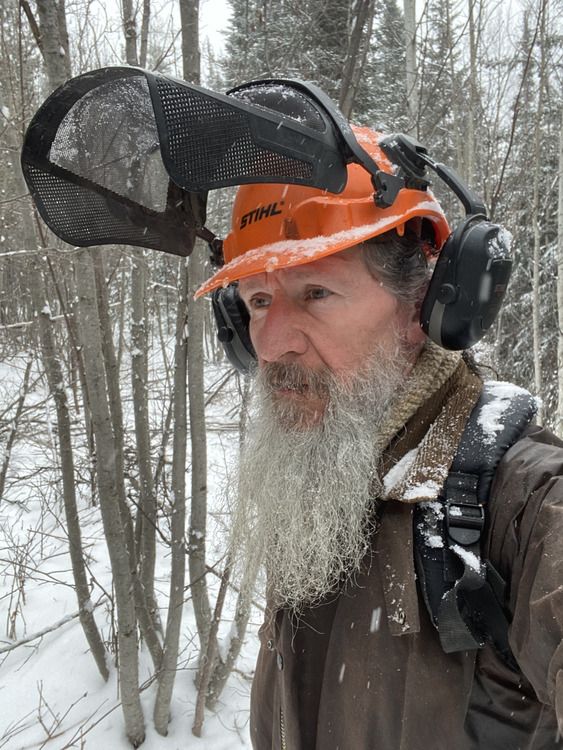
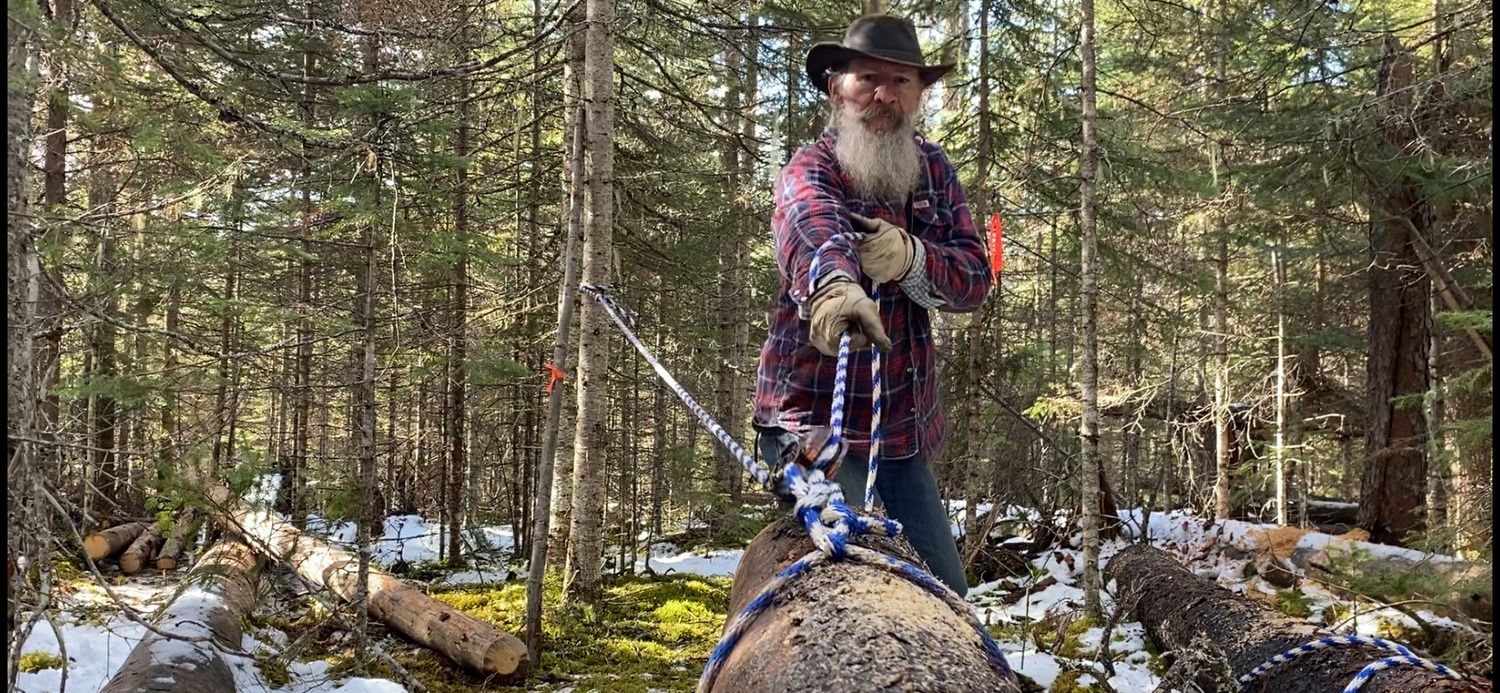
Pulling Logs out of the forrest

I added an extra two feet to the length of each wall, marked the trees to size, and then - using two pulleys and a rope-towed all the logs to the building site.

During the operation I learned how to tie quick, strong knots and to use a three-stage block-and-tackle. Pulling the logs with our draft horse "Norm" was impossible; the logs had to be dragged over uneven ground, and there was simply no space to maneuver a horse.

In total, bringing in 40 logs took me about 8 days. The effort was well worth it. Now I have the timber I need to construct a true log cabin, right where it belongs.
Pulling Logs out of the forrest
Pulling Logs out of the forrest


Share on Facebook

Ground Preparation

I extended the trail along the ridge for an additional 400 m. It was hard work, especially in March when there was still a couple of inches of snow.

For the past few years I've been hunting for the perfect spot to build a cabin - something quiet, surrounded by trees, and far from the hustle of town. After several visits, I finally pinned down the exact dimensions and could start visualising the finished structure.

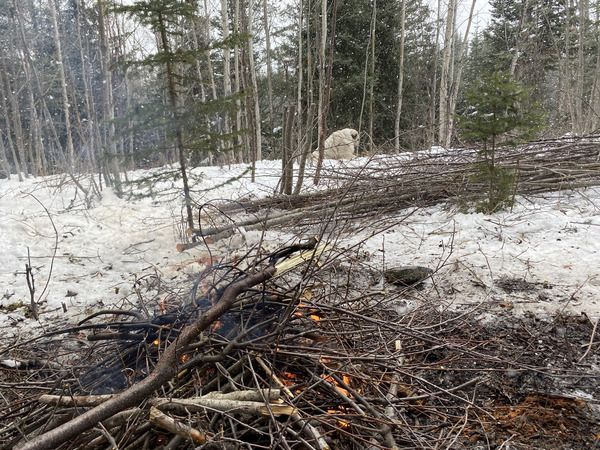
Alot of branches laying around in the woods

1. Finding the Site

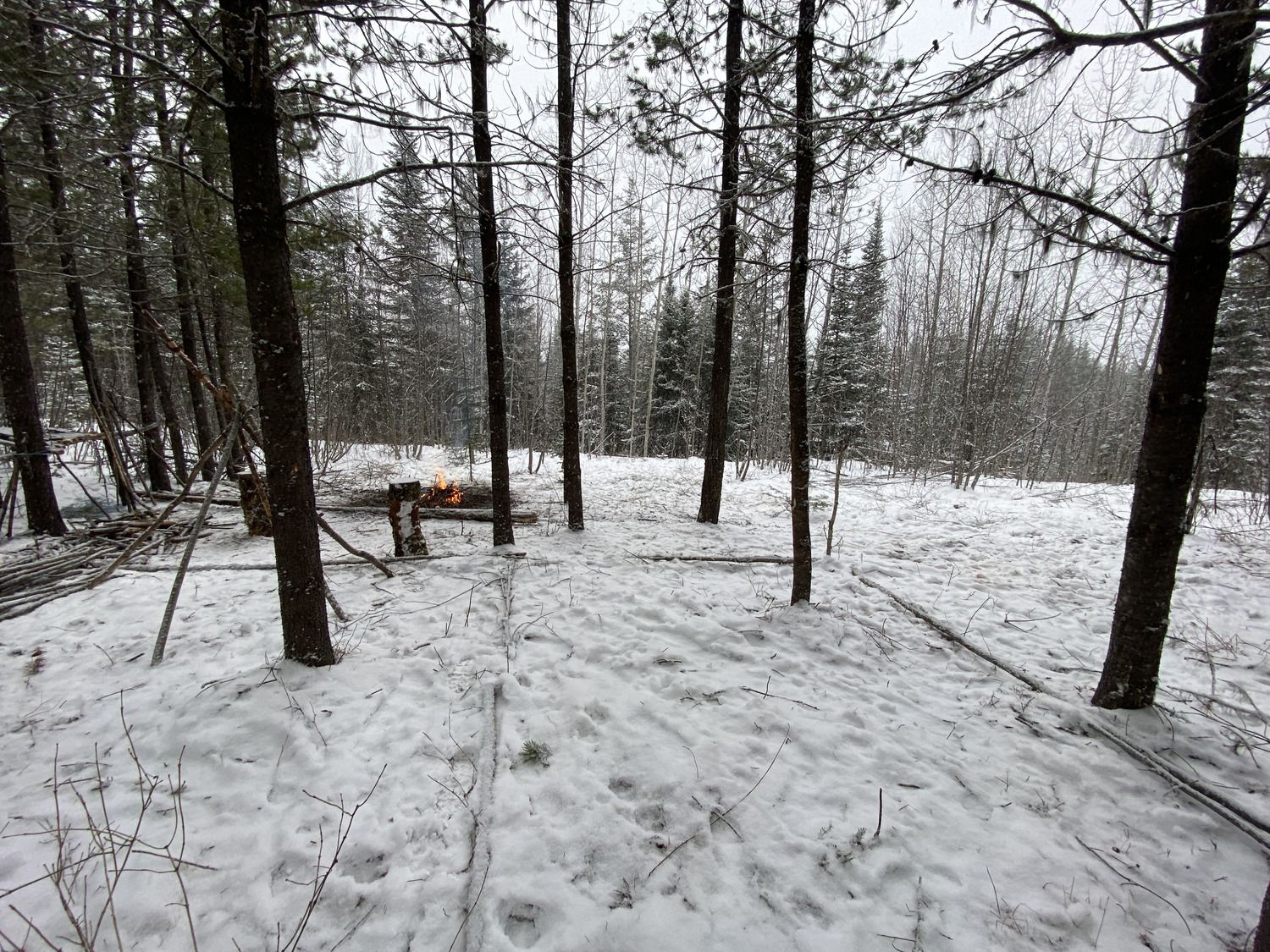
I scouted the area until I found a small clearing that would comfortably fit the cabin's footprint. I measured the lot, drew the layout on paper, and marked the future entrance and door placement. View from the imaginary cabin's spot

2. Clearing a Path

The only way in was a thick stand of forest. In March, when a thin layer of snow still clung to the ground, I set out to clear a path.

  • Saw-mill and Trail
    I passed the old sawmill at the edge of the woods and followed the old trail, which led me up the ridge.

  • Brush-saw
    Using a brush-saw, I cut through the underbrush and low branches, clearing about 400 m of trail. The work was exhausting, but the fresh scent of pine and the crunch of snow underfoot made it worthwhile.

To create space for the cabin, I had to remove about six green trees that were standing directly in the spot.

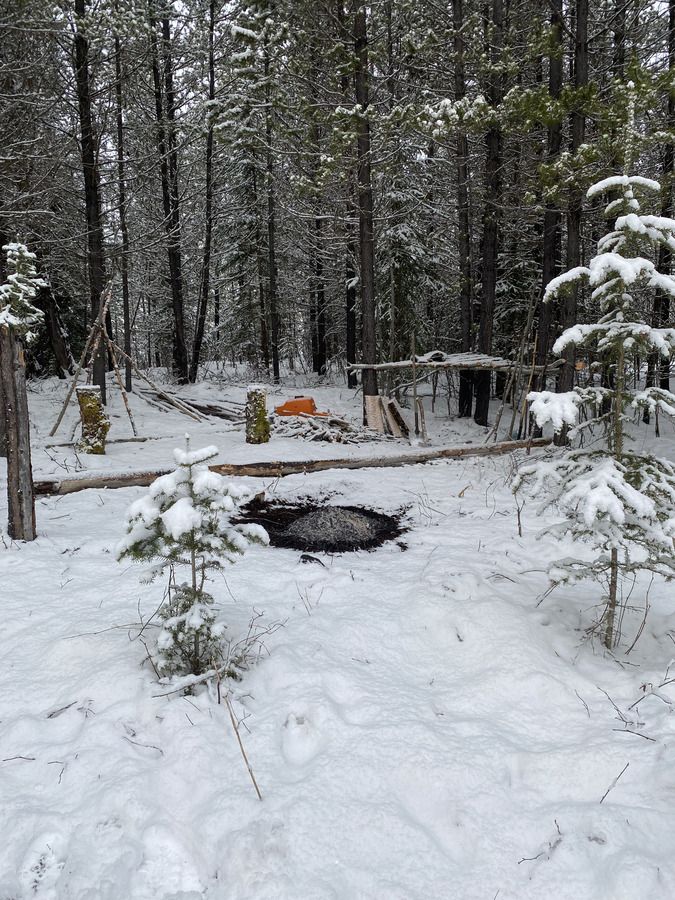
The ground was not exactly level. I did some digging to make it pretty flat. While leveling, I separated branches, moss, dirt, gravel, and large stones.

Already burnt branches

The entire process took me about two days.


Share on Facebook

I enjoy the surrounding in the Forrest

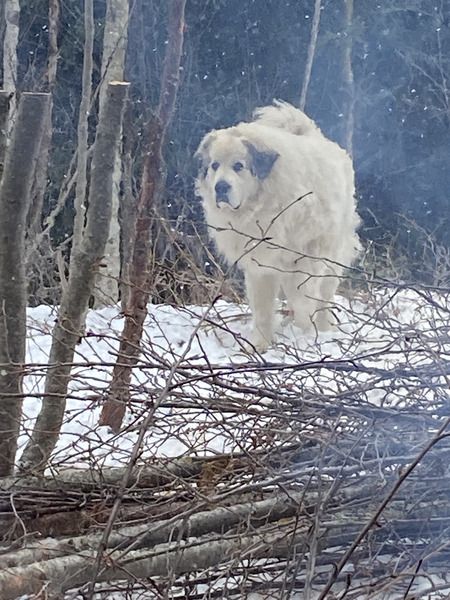
From my perch beside the freshly cleared trail, I watched the woods breathe while you hammered and sawed, my tail wagging with every new scent that drifted in.

Sam laying in the snow

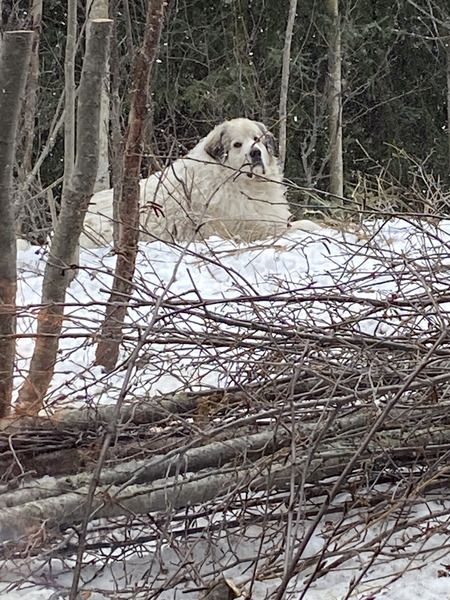
Browsing squirrels became my afternoon parade, while you nodded in concentration, and I snorted approvingly whenever you tossed a treat.

Sam laying in the snow

When the day turned cool and the snow began to fall again, I settled in the patch of grass next to you, content that I'd helped you build a home and that I'd earned a bite of your reward.


Share on Facebook